
Dhaka: The Living Capital of Bangladesh
Dhaka, the capital city of Bangladesh, is one of the most densely populated and culturally vibrant cities in the world. Often described as chaotic, colorful, and endlessly energetic, Dhaka is not just a political capital—it is the historical heart, cultural soul, and economic engine of the country. From Mughal-era forts and colonial palaces to modern architectural marvels and legendary street food, Dhaka offers a deeply layered urban experience shaped by centuries of history.
Located on the banks of the Buriganga River, Dhaka has witnessed the rise and fall of empires, colonial rule, liberation struggles, and rapid modernization. Today, it stands as a city of contrasts—ancient mosques beside glass towers, rickshaw-clogged lanes next to flyovers, and quiet heritage sites hidden behind bustling bazaars.
This comprehensive guide explores Dhaka as a capital city through its historical landmarks, national architecture, and rich street food culture, offering travelers, students, and culture enthusiasts a complete picture of this remarkable metropolis.
Dhaka at a Glance: The Capital City of Bangladesh
Dhaka is the political, administrative, and cultural center of Bangladesh. As one of South Asia’s oldest cities, its history spans over 400 years of documented urban development.
Quick facts about Dhaka:
- Capital of Bangladesh since 1971
- Population: Over 20 million (Greater Dhaka)
- Situated along the Buriganga, Turag, and Balu rivers
- Former capital of Mughal Bengal
- Known for rickshaws, mosques, street food, and resilience
Dhaka’s character is shaped by its people—entrepreneurs, artists, students, laborers, and dreamers—who keep the city alive around the clock.
A Brief History of Dhaka
Early Origins and Pre-Mughal Era
Dhaka’s early history can be traced back to the 7th century when the region was under Buddhist and Hindu kingdoms. Archaeological evidence suggests settlement during the Pala and Sena dynasties, although Dhaka was not yet a major political center.
Dhaka During the Mughal Empire
Dhaka rose to prominence in 1610 when it became the capital of Mughal Bengal under Subahdar Islam Khan Chishti. Renamed Jahangirnagar, the city flourished as a center of administration, trade, and culture.
During this era:
- Dhaka became famous for Muslin, one of the world’s finest textiles
- Forts, mosques, caravanserais, and palaces were built
- Trade links extended to Europe, the Middle East, and East Asia
Many of Dhaka’s most iconic historical sites date back to this Mughal period.
British Colonial Period
After the Battle of Plassey in 1757, British colonial rule diminished Dhaka’s importance as Calcutta became the regional capital. However, Dhaka remained an educational and cultural hub.
Notable developments included:
- Establishment of Dhaka University (1921)
- Construction of colonial-era buildings
- Growth of civic institutions
Dhaka and the Birth of Bangladesh
Dhaka played a central role in the Language Movement of 1952 and the Liberation War of 1971. After independence, Dhaka was declared the capital of Bangladesh and began expanding rapidly.
Old Dhaka: The Historic Core of the City
Old Dhaka is the soul of the capital. Narrow alleys, centuries-old buildings, bustling markets, and historic mosques define this area. It is here that Dhaka’s past feels most alive.
Lalbagh Fort: An Unfinished Mughal Dream
Lalbagh Fort is one of the most iconic historical sites in Dhaka. Built in 1678 by Prince Muhammad Azam, the son of Mughal Emperor Aurangzeb, the fort remains unfinished yet deeply captivating.
Key Features of Lalbagh Fort
- Fort walls and gateways
- Diwan-i-Aam (Audience Hall)
- Tomb of Pari Bibi
- Mosque and gardens
The tragic story of Pari Bibi’s death is often cited as the reason construction was abandoned. Despite this, Lalbagh Fort stands as a powerful symbol of Mughal architectural elegance in Bangladesh.
Visitors come to Lalbagh Fort to explore:
- Mughal-era architecture
- Peaceful gardens within a busy city
- Panoramic views of Old Dhaka
Ahsan Manzil: The Pink Palace of Dhaka
Situated along the Buriganga River, Ahsan Manzil is another jewel of Dhaka’s heritage. Also known as the Pink Palace, it was the residence of the Nawabs of Dhaka during the 19th century.
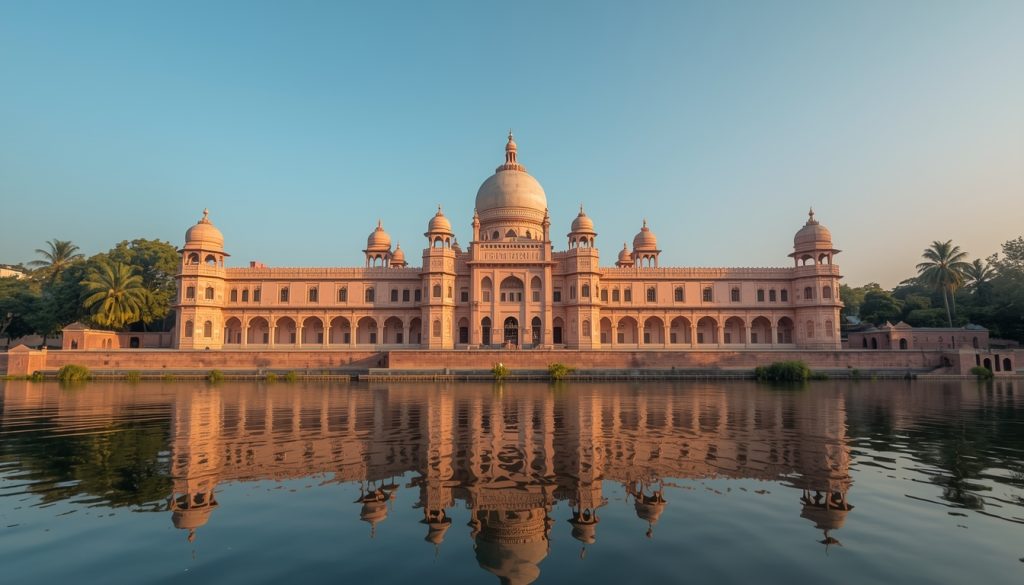
Historical Significance
- Built during British colonial rule
- Center of political and social life
- Hosted important meetings during Bengal’s reform movements
Architecture and Museum
Ahsan Manzil combines Indo-Saracenic and European architectural styles. Today, it functions as a museum showcasing:
- Nawab family artifacts
- Historical photographs
- Furniture, weapons, and manuscripts
A visit to Ahsan Manzil offers insight into aristocratic life in colonial Bengal and Dhaka’s transformation into a modern capital.
National Parliament House: A Global Architectural Icon
No discussion of Dhaka is complete without the National Parliament House (Jatiyo Sangsad Bhaban)—one of the most significant architectural achievements of the 20th century.
Designed by Louis I. Kahn
American architect Louis Kahn designed the complex in the 1960s. The building is internationally celebrated for its:
- Monumental geometric forms
- Use of natural light and water
- Symbolic representation of democracy
Architectural Philosophy
The structure reflects simplicity, strength, and permanence. Massive concrete forms are softened by:
- Reflecting pools
- Open spaces
- Carefully placed openings for light
Cultural and Political Importance
- Houses the Parliament of Bangladesh
- Symbol of national identity
- Popular tourist attraction
Even from the outside, the National Parliament House leaves visitors in awe and is considered one of the finest examples of modernist architecture worldwide.
Dhaka’s Street Food Culture: A City That Eats Together
Dhaka’s street food culture is legendary. Food is not just nourishment here—it’s a social ritual, a memory, and a daily celebration.
Why Street Food Matters in Dhaka
- Affordable and accessible
- Deeply connected to local traditions
- Available day and night
From Old Dhaka to Dhanmondi, street food stalls define the rhythm of the city.
Iconic Street Foods of Dhaka
Fuchka (Puchka)
The undisputed king of Dhaka street food. Crisp shells filled with spicy mashed potatoes, chickpeas, tamarind, and green chili water.
Chotpoti
A hearty dish made with boiled peas, potatoes, eggs, and spices. Popular in Old Dhaka and near schools and universities.
Jhalmuri
Puffed rice mixed with mustard oil, onions, chili, peanuts, and lime. A classic evening snack.
Kebab and Chap
Dhaka is famous for:
- Shik kebab
- Boti kebab
- Beef and chicken chap
Especially popular in Old Dhaka’s Chowk Bazaar area.
Bakarkhani and Nihari
A traditional Old Dhaka breakfast combination, deeply influenced by Mughal cuisine.
Cultural Life in Dhaka
Festivals and Celebrations
Dhaka celebrates diversity through festivals such as:
- Pohela Boishakh (Bengali New Year)
- Eid-ul-Fitr and Eid-ul-Adha
- Durga Puja
- Language Martyrs’ Day
The city transforms during festivals with processions, food fairs, and cultural programs.
Rickshaws: Moving Art Galleries
Dhaka’s rickshaws are famous for their colorful painted panels depicting movies, folklore, and social themes. They are both transportation and folk art.
Modern Dhaka: Growth and Challenges
As a rapidly growing megacity, Dhaka faces significant challenges:
- Traffic congestion
- Environmental pollution
- Housing shortages
At the same time, it is experiencing:
- Infrastructure development
- Metro rail projects
- Expansion of technology and startups
Dhaka continues to evolve, balancing tradition with modern demands.
Best Time to Visit Dhaka
The ideal time to visit Dhaka is between November and February when:
- Weather is cooler and drier
- Festivals and cultural events are common
- Walking tours are more enjoyable
Why Dhaka Matters
Dhaka is not an easy city—but it is a rewarding one. It demands patience, curiosity, and openness. In return, it offers:
- Unfiltered history
- Architectural brilliance
- Unmatched street food
- Warm, resilient people
To understand Bangladesh, you must experience Dhaka.
Final Thoughts: Dhaka, a Capital That Never Sleeps
Dhaka is more than a capital city—it is a living organism shaped by centuries of ambition, struggle, creativity, and hope. From the silent ruins of Lalbagh Fort to the pink grandeur of Ahsan Manzil, from the solemn strength of the National Parliament House to the sizzling sounds of street food stalls, Dhaka tells a story that is complex, honest, and unforgettable.
For travelers, historians, food lovers, and curious minds, Dhaka offers something rare: a city that shows its heart openly, flaws and all.
If you’re ready to explore a capital city that truly lives and breathes history and culture—Dhaka is waiting.


